


Page 80 - WEF Reoprt 2020
P. 80
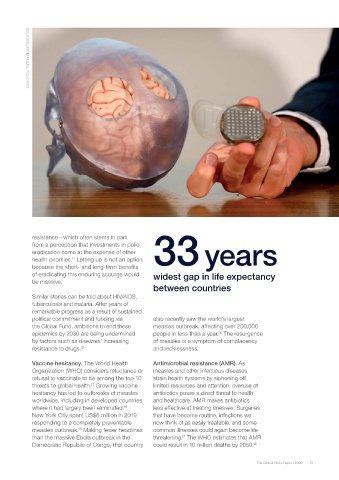
REUTERS/EMMANUEL FOUDROT


            resistance—which often stems in part
            from a perception that investments in polio
            eradication come at the expense of other   33 years
            health priorities.  Letting up is not an option
                          11
            because the short- and long-term benefits
            of eradicating this enduring scourge would   widest gap in life expectancy
            be massive.
                                                       between countries
            Similar stories can be told about HIV/AIDS,
            tuberculosis and malaria. After years of
            remarkable progress as a result of sustained
            political commitment and funding via       also recently saw the world’s largest
            the Global Fund, ambitions to end these    measles outbreak, affecting over 200,000
            epidemics by 2030 are being undermined     people in less than a year.  The resurgence
                                                                              16
            by factors such as diseases’ increasing    of measles is a symptom of complacency
            resistance to drugs. 12                    and recklessness.

            Vaccine hesitancy. The World Health        Antimicrobial resistance (AMR). As
            Organization (WHO) considers reluctance or   measles and other infectious diseases
            refusal to vaccinate to be among the top 10   strain health systems by siphoning off
            threats to global health.  Growing vaccine   limited resources and attention, overuse of
                                 13
            hesitancy has led to outbreaks of measles   antibiotics poses a direct threat to health
            worldwide, including in developed countries   and healthcare. AMR makes antibiotics
            where it had largely been eliminated.      less effective at treating illnesses. Surgeries
                                            14
            New York City spent US$6 million in 2019   that have become routine, infections we
            responding to a completely preventable     now think of as easily treatable, and some
            measles outbreak.  Making fewer headlines   common illnesses could again become life-
                            15
            than the massive Ebola outbreak in the     threatening.  The WHO estimates that AMR
                                                                 17
            Democratic Republic of Congo, that country   could result in 10 million deaths by 2050. 18

                                                                                           The Global Risks Report 2020  75

